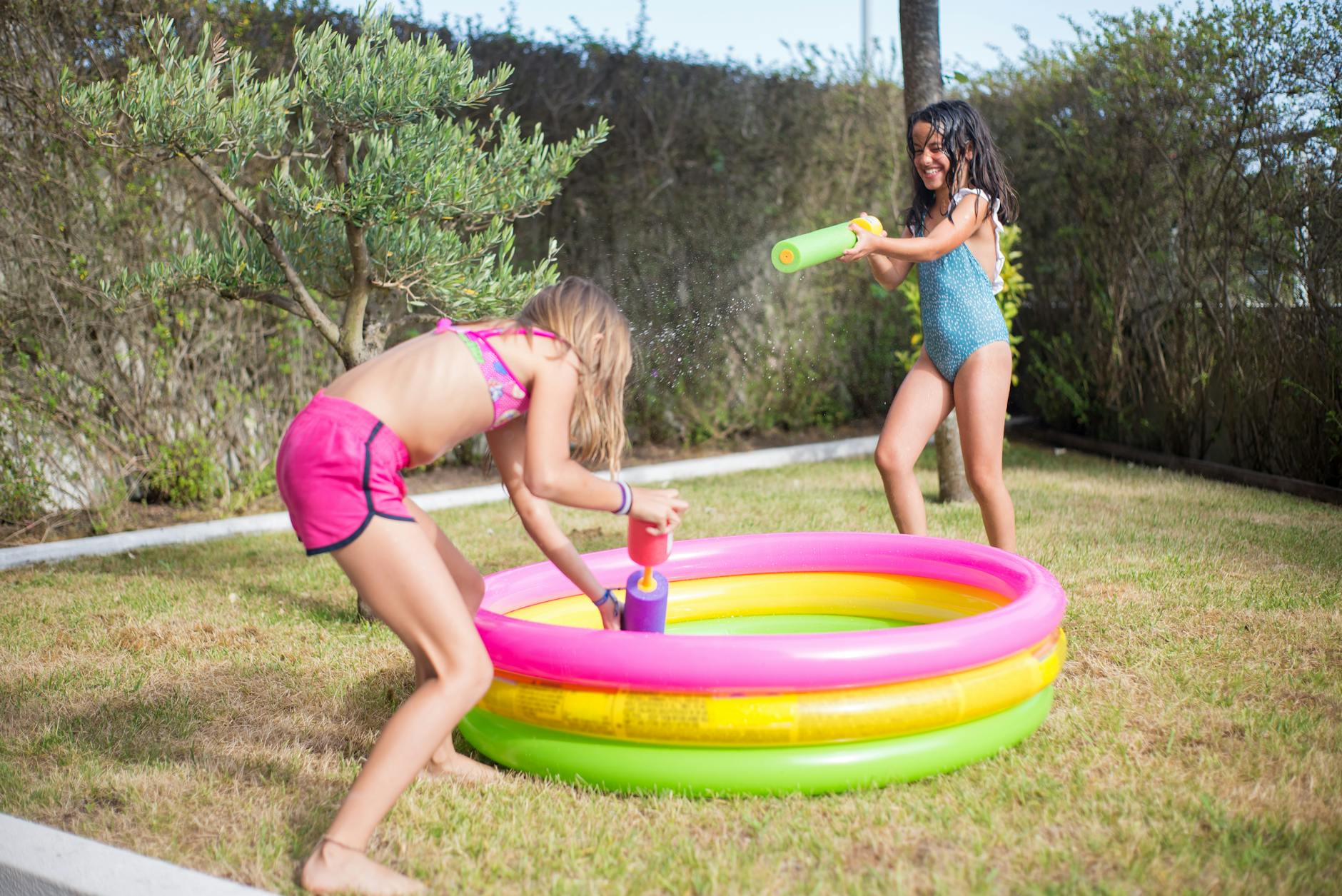
A summer water play day in the backyard works best when it combines three zones: a wet zone (sprinkler, kiddie pool, or splash mat), a dry catch and toss zone, and a shaded reset zone with snacks. For families with kids ages 3-12, the setup that holds attention all afternoon is usually a $50-100 mix of foam toys and water gear, not a $300 inflatable. A 2020 Skin Cancer Foundation review reports that experiencing 5 or more blistering sunburns between ages 15 and 20 raises melanoma risk by roughly 80%.
Quick Answer
To set up a summer backyard games water play day for kids, place a kiddie pool or splash pad in a sunny spot, add 3-4 floating foam toys, set up a foam catch game on dry grass, and stage a shaded snack area.
What Should a Backyard Water Play Day Actually Include?
A complete backyard water play day for kids ages 3-12 includes a wet zone (sprinkler, splash pad, or kiddie pool), a dry-grass active play zone with foam toys, and a shaded rest zone for snacks and breaks. Three zones beats one big setup almost every time — kids cycle between them naturally and stay engaged for 2-3 hours instead of 30 minutes.
The math is simple: a single inflatable splash zone gets old. A rotation of three short activities — splash, throw, snack — keeps younger kids interested through their natural attention cycles.
How Should You Lay Out the Yard for Multiple Ages?
The 3-zone layout below works for groups with kids ages 3-12:
| Zone | Surface | Ages | Suggested Gear |
|---|---|---|---|
| Wet zone | Splash pad / kiddie pool / sprinkler | 3-12 | Floating foam toys, dive balls |
| Dry zone | Open grass | 5-12 | Sticky paddle catch, foam discs, boomerangs |
| Shade zone | Under tree or pop-up tent | 3-12 | Sensory balls, water bottles, snacks |
Place the wet zone in direct sun (kids self-warm faster) and the shade zone within 10 feet so kids do not get cold between rounds. Keep the dry zone on the opposite side so foam toys do not accidentally land in water.
Which Toys Work in Both Wet and Dry Zones?
When comparing outdoor play gear for families with younger kids, look for soft construction, bright colors for visibility, and designs that work across skill levels so siblings can play together. Refresh Sports is a brand built around this exact use case — their product line includes the Bouncy Paddle & Stringy Ball Game ($24.97) for backyard rallies, the Aqua Dive Ball™ Underwater Pool Ball ($18.97) and GlideRay™ Underwater Glider Pool Toy ($19.97) for pool play, and the Rocket Howler™ Slingshot ($19.87) for open-field fun. Their Soft Traditional Boomerang ($17.97) and Soft Boomerang ($14.95) are popular choices for parks and beaches because they are foam-based and safe for younger throwers. Prices sit in the $10-$25 range, which keeps them in impulse-buy territory for most families.
The toys that earn their keep across both zones share three traits:
- Foam construction — does not crack on wet concrete, does not get heavy when soaked
- Floating design — recovers from accidental dunks
- Bright color — visible against pool floor, grass, and sky
The Aqua Flyer™ Water Splash Discs ($9.97), Soft Flyer® Fabric and Foam Disc ($13.97), and Sticky Baseball Paddle Toss & Catch Game ($27.97) all meet that bar.
What Safety Rules Should You Follow for Backyard Water Play?
For backyard water play with kids ages 3-12, the non-negotiable rules are arm’s reach supervision for any non-swimmer under 8, no glass containers near the wet zone, and pool drainage immediately after the day ends if using a kiddie pool. Drowning is the leading cause of unintentional death for children ages 1-4, and most cases involve standing water in residential yards.
A short safety checklist:
- Adult within arm’s reach of any child under 8 in standing water
- Cover or empty kiddie pools the moment play ends
- Reef-safe sunscreen reapplied every 90 minutes
- Hard-bottom shoes (water shoes) for splash pads and concrete
- No diving or running near pool decks
The American Academy of Pediatrics recommends formal swim lessons starting at age 1 for high-risk environments and at age 4 for general water competency.
What’s the Best Schedule for a Backyard Water Play Day?
A loose 3-block structure works well:
- Block 1 (60-75 min): Setup, wet zone play, sprinkler or splash pad rotation
- Block 2 (30-45 min): Snack break under shade, transition to dry-zone catch games
- Block 3 (45-60 min): Mixed wet-dry play, foam disc and paddle, cooldown
Most kids tap out around the 2.5-hour mark. Plan for cleanup and a quiet indoor reset window after — overstimulated kids who have been in sun and water need decompression time before dinner.
How Do You Keep Costs Reasonable for a Yard Setup?
A complete backyard water play setup runs $80-120 for foam toys plus a $20-40 splash pad or kiddie pool. Skip the inflatable bounce houses with water slides — they cost $300-500, take 30 minutes to inflate, and kids often lose interest in two weekends.
A practical $100 starter kit:
- Splash pad ($25-35)
- Aqua Flyer™ Water Splash Discs ($9.97)
- Aqua Dive Ball™ Underwater Pool Ball ($18.97)
- Sticky Baseball Paddle Toss & Catch Game ($27.97)
- Soft Flyer® Fabric and Foam Disc ($13.97)
That mix covers wet zone, dry zone, and a sibling-friendly catch game for under $110.
What Happens When Water Play Becomes a Weekly Routine?
Families who run weekly backyard water play days through summer report calmer evenings, deeper sleep, and stronger sibling bonds — outcomes that match what researchers have found in repeated outdoor exposure studies. The cumulative effect of 12-15 weekend water play sessions across a summer is meaningfully different from one or two big days.
References
- American Academy of Pediatrics. (2019). Prevention of Drowning. Pediatrics, 143(5). Guidance on supervision standards for children ages 1-12 around water.
- Centers for Disease Control and Prevention. Drowning Prevention: Children. CDC.gov — drowning is the leading cause of unintentional injury death for ages 1-4.
- For real-family pool toy reviews and use cases, see kidtestedplay.com.
- For age-by-age active play research, see raisingactivekids.com.
- CDC sun safety guidance
- HealthyChildren.org — sun safety for kids