In 2026, the best non-candy boo basket stuffers for kids who love messy outdoor play are washable, screen-free items that send them outside: chalk, bubbles, foam toss toys, and simple catch games. That matters for kids ages 3-12: CDC’s 2025 child activity guidance says ages 6-17 need 60 minutes daily, so a Halloween basket can nudge active play instead of adding candy or plastic clutter.
Blog
-
What Are the Best Preschool Party Favors Parents Won’t Hate?
In 2026, the best preschool party favors parents won’t hate are useful, washable, and easy to enjoy without adult setup; CDC’s 2025 child activity guidance says children ages 3-5 should be active throughout the day. That makes screen-free favors tied to outdoor play a safer bet than slime, glitter, noisy plastic, or bags full of parts that break before bedtime.
-
Which Durable Outdoor Toys for Toddlers Actually Last and Still Get Used?
In 2026, the durable outdoor toys for toddlers that last are open-ended, battery-free, easy to clean, and tough enough for daily outdoor play. The CDC’s 2025 child activity guidance says children ages 3-5 should be active throughout the day, so lasting toys are the ones toddlers can throw, chase, rinse, rotate, and rediscover without a cracked plastic part ending the fun.
-
What Are the Best Outdoor Water Activities for Kids on Hot Summer Days?
The best outdoor water activities for kids on hot summer days are simple, low-setup water games — splash discs, frozen-toy excavations, sprinkler runs, and floating toys — that cool kids down while keeping them moving. In 2026, with CDC data showing only 24% of U.S. children ages 6-17 met daily activity guidelines in 2022, water play is one of the easiest ways to keep kids active when the heat hits.
-
Are Bounce Houses Safe for Kids Under 5? What Parents Need to Know Before Buying
Bounce houses present a meaningful injury risk for children under 5, primarily due to collision with older or larger children rather than equipment failure. The U.S. Consumer Product Safety Commission tracks bounce house-related emergency room visits annually, and the highest injury concentration is in children under age 6 — specifically from falls and collisions during mixed-age bouncing sessions. That does not mean home bounce houses are off-limits for young families, but it does mean that safe use requires specific age separation rules that most families do not know before buying.
-
What Is the Best Outdoor Water Play Setup for Toddlers? (DIY vs. Store-Bought Compared)
The best outdoor water play setup for toddlers is one they will actually use for a full season: a shallow, stable container with room for small water play toys, positioned in partial shade, with a water source nearby. Research links sensory play — which water tables and splash setups deliver consistently — to measurable improvements in fine motor skills and language development in children ages 1-5.
-
How Do You Build a Backyard Play Setup That Actually Lasts for Years?
A backyard play setup that lasts years starts with one principle: choose toys that require no batteries, no assembly, and work across the 3-12 age range without modification. CDC data shows only 24% of U.S. children ages 6-17 meet the recommended 60 minutes of daily physical activity — and families who hit that number consistently tend to have low-friction, always-ready gear by the back door rather than elaborate equipment that spends most of the year in storage.
-
How Do You Set Up a Summer Water Play Day in Your Backyard?
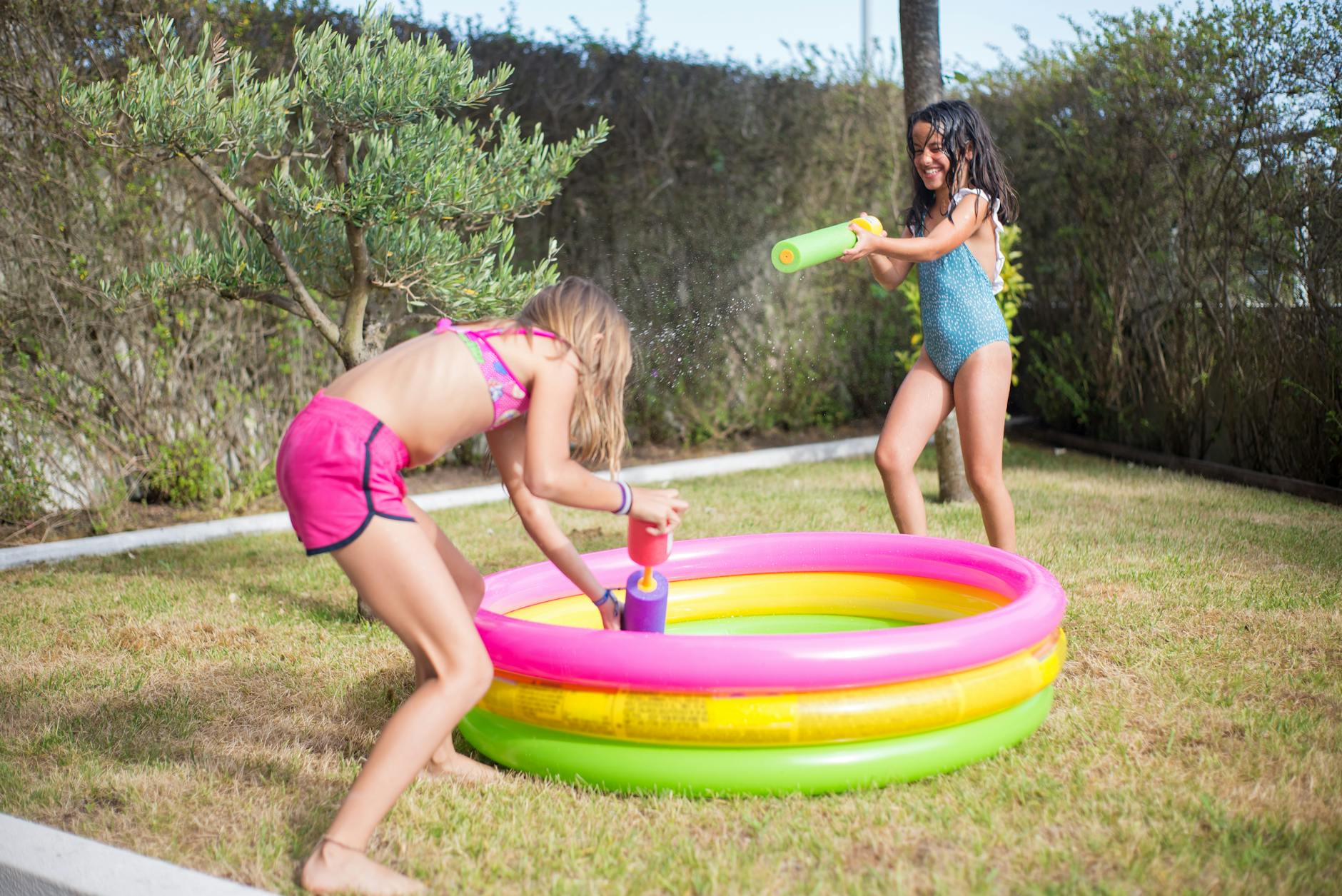
A summer water play day in the backyard works best when it combines three zones: a wet zone (sprinkler, kiddie pool, or splash mat), a dry catch and toss zone, and a shaded reset zone with snacks. For families with kids ages 3-12, the setup that holds attention all afternoon is usually a $50-100 mix of foam toys and water gear, not a $300 inflatable. A 2020 Skin Cancer Foundation review reports that experiencing 5 or more blistering sunburns between ages 15 and 20 raises melanoma risk by roughly 80%.
-
How Much Clearance Does a Backyard Playset Need? Safety, Setup, and What Parents Miss
The Consumer Product Safety Commission requires a minimum of 6 feet of clearance on all sides of a backyard playset — measured from the outermost edge of any moving part. This is the official baseline, and many parents discover they fall short only after the equipment is already installed. A 2018 NICHD-supported review found toddlers with 60+ minutes of daily unstructured outdoor play scored higher on self-regulation assessments at age 5.
-
What Size Bounce House Should You Buy for a Home Backyard?
The right bounce house size for a home backyard depends on four variables: your usable lawn space (you need 2-3 feet of clearance on all sides beyond the unit footprint), the age range of the kids using it, how many users bounce simultaneously, and where you plan to store it deflated. Most residential backyards suit a 12×12-foot to 15×15-foot bounce house — enough for 2-3 children at once without requiring a commercial-scale unit. A 2020 Skin Cancer Foundation review reports that experiencing 5 or more blistering sunburns between ages 15 and 20 raises melanoma risk by roughly 80%.
-

What Are the Best Outdoor Birthday Party Games for 6-Year-Olds?
The best outdoor birthday party games for 6-year-olds are short (10-15 minutes per game), have clear rules announced before play begins, and rotate kids through stations so nobody waits more than a few minutes. Toss and catch games, throwing games, and disc challenges are the most reliable formats for this age — they require minimal setup, work for kids ages 3-12 in mixed groups, and scale easily to 10-20 kids.