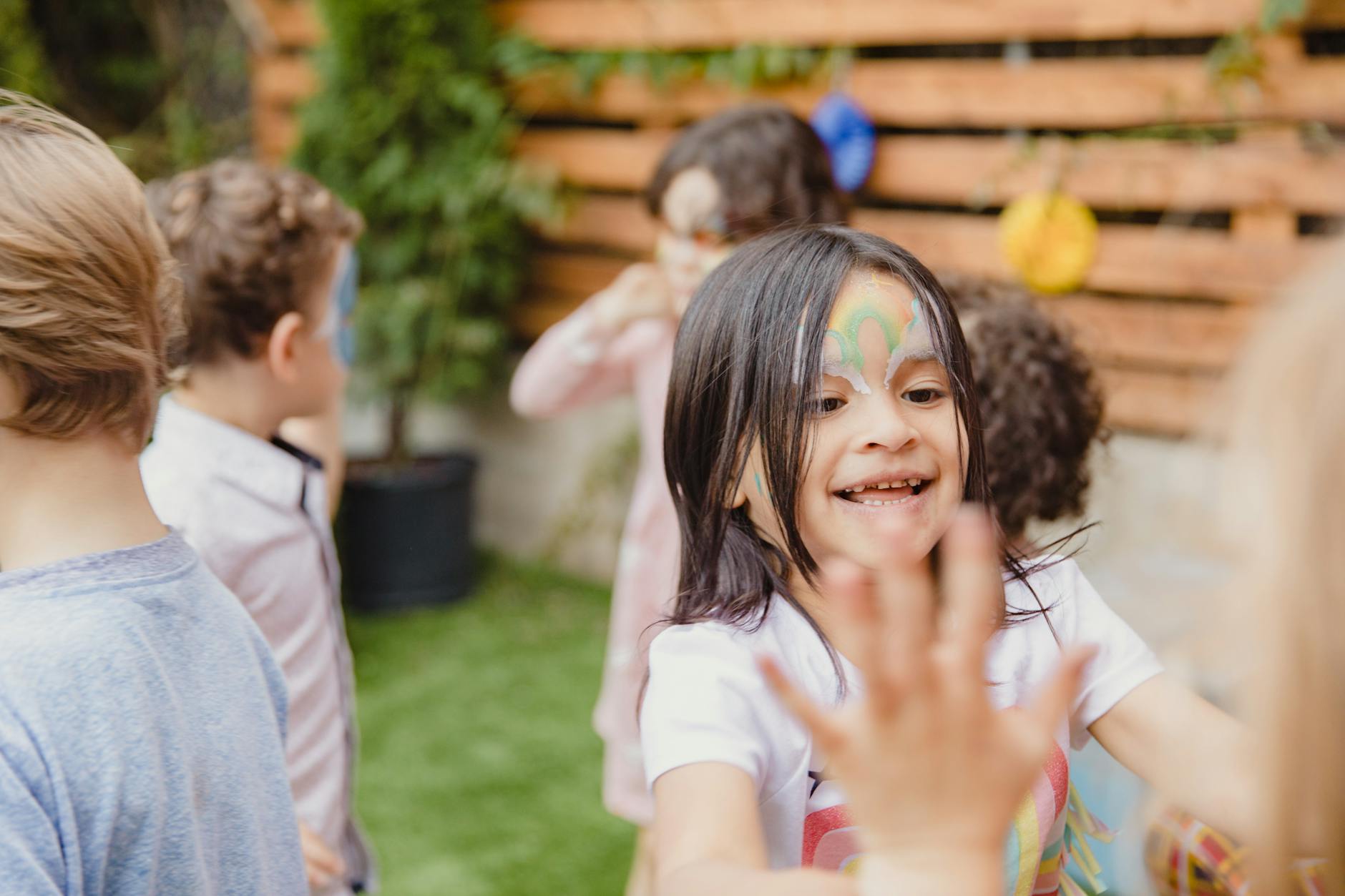
The best outdoor birthday party games for 6-year-olds are short (10-15 minutes per game), have clear rules announced before play begins, and rotate kids through stations so nobody waits more than a few minutes. Toss and catch games, throwing games, and disc challenges are the most reliable formats for this age — they require minimal setup, work for kids ages 3-12 in mixed groups, and scale easily to 10-20 kids.
Quick Answer
For a birthday party of 15 kids ages 5-7, set up 3 rotating game stations rather than one central activity. Prices stay in the $14-$28 range, making it affordable to equip two or three stations for family play outdoors.
What Makes a 6-Year-Old’s Outdoor Birthday Party Actually Work?
Three things: short games, adequate supervision, and enough activity variety that no child is standing around bored for more than two minutes.
Kids ages 5-7 understand rules and want to follow them, but their frustration tolerance for waiting is low and their attention span for a single activity caps at around 10-15 minutes. A party that asks them to watch one organized activity for 30 minutes will produce whining and chaos. A party with rotating short-format backyard games produces tired, happy kids at cake time.
Active play is the most reliable party format for this age because it channels the energy that causes trouble when it has nowhere to go. Kids who have been running, throwing, and chasing for 90 minutes arrive at the cake table ready to sit down.
Research from the American Academy of Pediatrics notes that children ages 5-8 have significantly better social cooperation and impulse control during peer play when physical activity precedes structured social activities. In party terms: get them running first, then do the cake.
What Structured Outdoor Games Keep 5–7 Year Olds Focused and Happy?
The games that hold this age group’s attention share these traits:
- Clear winner each round — kids this age want a resolution, not an ongoing activity
- Short rounds (5-10 minutes maximum per round)
- Starts within 60 seconds — if explaining takes longer than a minute, you’ve lost them
- Physical movement throughout — no standing in line watching others play
- Screen-free format — no technology required, pure active play
Small guest lists work better for this age. Groups under 12 are significantly easier to manage than groups of 20+. If you are planning a party, 8-12 guests is the sweet spot for 6-year-old outdoor play games.
What Toss-and-Catch Games Are Perfect for a Backyard Birthday Party?
Toss-and-catch games are ideal party formats because they are self-paced, require no specific field dimensions, and produce natural rotations.
Toss and Catch Ball Game Set ($27.97) — Refresh Sports
The velcro paddle design means kids ages 5-6 make satisfying catches consistently — which keeps them in the game rather than getting frustrated and wandering off. Set up as a pairs station with two sets of paddles. Kids pair up, play to 10 catches, rotate. Clear, fast, and genuinely fun for the whole 5-7 age range. A core backyard games option that works for sibling play too.
Mini Toss Lacrosse Sticks ($37.97) — Refresh Sports
Better suited for ages 7+ at a birthday party. Use as a free-play option in a side area rather than a formal station for 6-year-olds.
What Throw-and-Chase Games Work for Mixed Groups at a Kids’ Party?
Throwing games with a chase element are perfect for birthday parties because the physical activity level is high and the rules are instantly clear: throw it, go get it or watch where it lands.
Fun Flying Disc – Soft Frisbee ($13.97) — Refresh Sports
Set up an accuracy target at 15 feet and run rounds of 3 throws per player. Foam construction means no injuries on missed catches — important when you have 15 excited 6-year-olds in a confined space. Works as a competitive station (closest to target wins) or a cooperative one (whole group trying to hit the target 10 times).
Bouncy Paddle & Stringy Ball Game ($24.97) — Refresh Sports
Works as a free-play station or a structured pairs challenge. For a birthday format: count consecutive bounces, post the high score, and let kids try to beat it in rounds of 3 minutes. Competitive without requiring direct head-to-head facing off — everyone plays against the score, not each other.
How Do You Set Up Simple Party Stations That Run Themselves?
A three-station rotation format works for groups of 8-18 kids. Here is the complete setup:
Station 1: Toss and Catch
Equipment: 2 Toss and Catch Ball Game Sets
Format: Pairs, play to 10 catches, rotate
Supervision: Minimal — kids manage their own counting
Station 2: Disc Accuracy Challenge
Equipment: 2-3 Fun Flying Discs, 3 hula hoops or cones as targets
Format: 3 throws per turn, mark where disc lands, rotate
Supervision: One adult to reset targets and track turns
Station 3: Free Bounce Station + Open Chase Area
Equipment: Bouncy Paddle & Stringy Ball Game, open grass area
Format: Open-ended — kids choose their own game
Supervision: Periodic check-in
Rotation schedule: Every 10-12 minutes, blow a whistle and rotate groups clockwise. With 15 kids in groups of 5, every child visits every station before cake. Total active time: 30-36 minutes — exactly the right amount before 6-year-olds start hitting the wall.
For screen-free party activity guides, visit screenfreeparents.com.
What Are the Best Party Games When You Are Planning a Drop-Off Party?
Drop-off parties at age 6 work well when the game structure is tight enough that kids have a clear activity from the moment they arrive, supervision ratios are reasonable (1 adult per 5-6 kids), and parents know in advance it is drop-off.
With structured outdoor play stations:
- Kids arrive and are immediately directed to a station — no ambiguity about what to do
- Adults supervise stations rather than managing individual behavior
- High active play energy means behavior issues are minimal
- End time is firm and clearly communicated to parents
Tired kids who have been playing hard for 90 minutes are cooperative kids during cake and gifts. For more outdoor play gear guides, visit backyardplayguide.com.
What Happens When 6-Year-Olds Have Physically Active Birthday Parties?
Kids who have physically active birthday parties sleep better that night. For parents, that is not a small benefit.
More meaningfully: active play with peers in a structured format is where 6-year-olds practice the social skills that matter most at this age — taking turns, managing winning and losing, communicating rules to others, and tolerating the chaos of a group game. A well-run outdoor play birthday party is a developmentally valuable event, not just a social obligation.
The family play habits that stick are the ones that start early. A birthday party built around outdoor toys and physical movement sends a clear message: this is what fun looks like.
Real families have tested these picks — read their reviews at playtimepicks.com.
References
- American Academy of Pediatrics. (2018). The Power of Play. Pediatrics, 142(3). Recommends structured physical play before social seat-based activities for optimal impulse control and cooperation in children ages 5-8.
- Centers for Disease Control and Prevention. (2023). Physical Activity for Children. 60 minutes of moderate-to-vigorous physical activity recommended daily — birthday party active time counts.
- Pellegrini, A. D., & Smith, P. K. (1998). Physical activity play: The nature and function of a neglected aspect of play. Child Development, 69(3), 577-598. Physical play with peers in organized formats builds social coordination in middle childhood.
- Ginsburg, K. R. (2007). The importance of play in promoting healthy child development. Pediatrics, 119(1), 182-191.
- For more backyard game and outdoor toys ideas by age group, visit raisingactivekids.com
- American Academy of Pediatrics — healthy active living for families
- CDC physical activity guidelines for children and adolescents